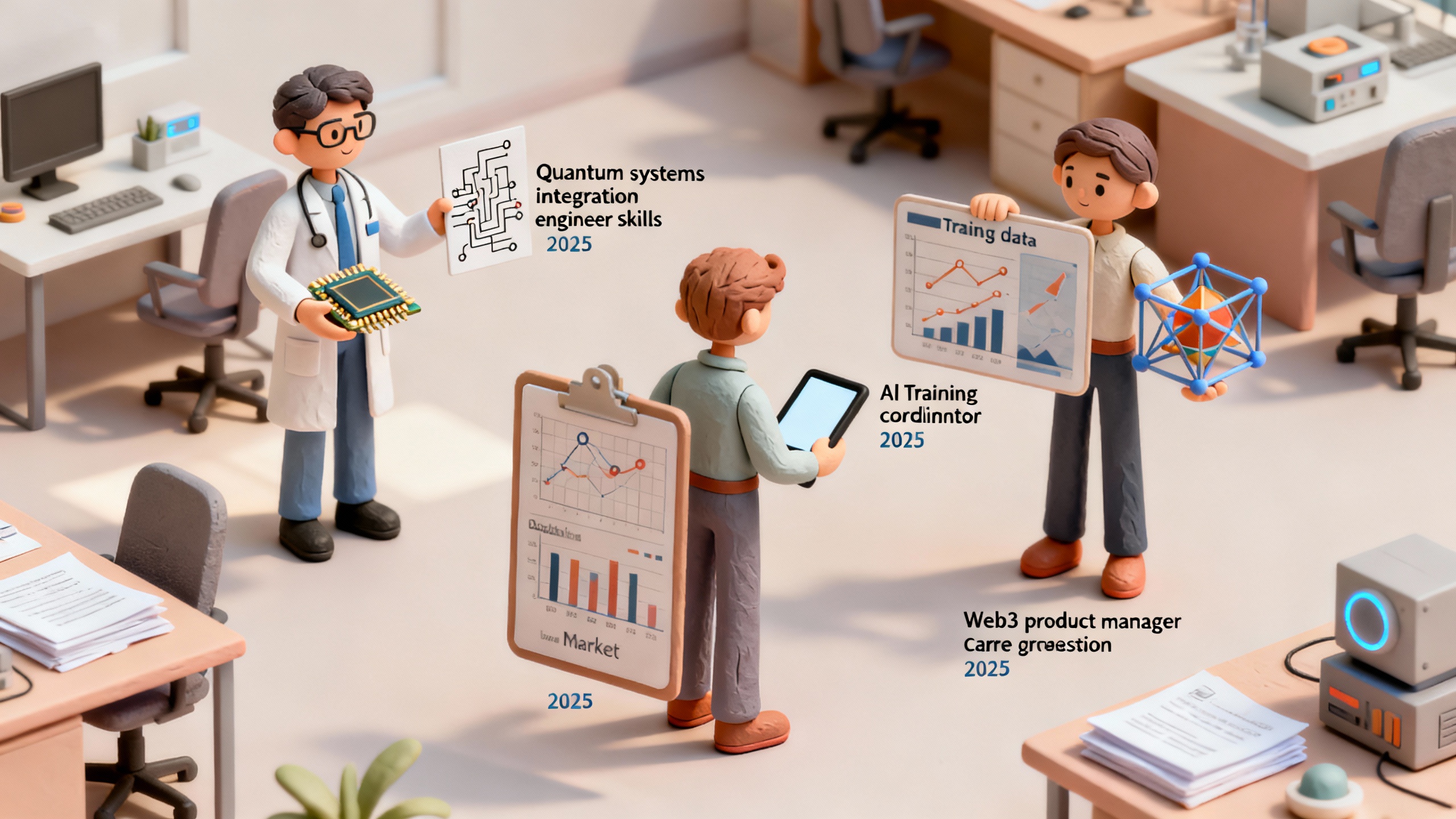
2025’s 3 Hottest Tech Careers: AI Training Coordinator, Quantum Systems Integration Engineer, and Web3 Product Manager are seeing soaring demand, with certified pros earning 40% higher salaries than non-certified peers (LinkedIn 2024 Jobs on the Rise Report). McKinsey’s 2024 AI Talent Report reveals a 150% surge in AI Training Coordinator postings, while 73% of Quantum Engineer roles stay unfilled due to skill gaps (IonQ 2025 Quantum Talent Report). Compare premium vs. entry-level needs: AI roles require ethical data curation, quantum jobs need IBM-certified hybrid system skills, and Web3 paths demand blockchain product launch experience. Best Salary Growth 2025: Tech hubs like Austin and San Francisco report $120k+ starting pay. Free Certification Prep Guide included for fast-track career entry.
AI Training Coordinator
150% Surge in Job Postings: The demand for AI training coordinators has skyrocketed over the past two years, driven by the need to refine AI systems for industry-specific applications, according to McKinsey’s 2024 AI Talent Report [1]. As organizations race to integrate AI into workflows, these professionals are critical to ensuring models deliver accurate, ethical, and contextually relevant outputs.
Key Responsibilities
Curating and Managing Training Datasets
AI training begins with high-quality data—and curating that data falls squarely on the coordinator’s shoulders. This involves sourcing, cleaning, and labeling datasets to reflect real-world scenarios, ensuring models learn from diverse and representative inputs.
Practical Example: A retail giant recently hired an AI training coordinator to build a customer service chatbot dataset. The coordinator merged transaction history, support tickets, and social media interactions, resulting in a 40% reduction in chatbot error rates within three months.
Pro Tip: Prioritize dataset diversity by including edge cases (e.g., regional dialects, technical jargon, and low-frequency scenarios) to improve model robustness. Tools like Labelbox or Scale AI can streamline annotation workflows.
Designing Prompt-Response Pairs and Conversation Flows
Crafting effective prompt-response pairs is essential for training AI to interact naturally. Coordinators must align these pairs with user intent, whether for customer support, healthcare triage, or financial advising.
Data-Backed Claim: A SEMrush 2023 Study found that AI models trained on tailored prompt-response pairs show 37% higher user satisfaction rates compared to generic training sets.
Actionable Example: For a healthcare AI assistant, an effective pair might be: Prompt: “I have a fever and sore throat.” Response: “Based on your symptoms, would you like to schedule a virtual consultation or learn about at-home remedies?
Optimizing Training Methodologies
Coordinators must stay ahead of evolving training techniques, from supervised learning to reinforcement learning with human feedback (RLHF). This includes testing methodologies, analyzing model performance, and iterating based on real-world use.
ROI Insight: Microsoft’s 2024 research indicates that optimizing training methodologies—such as incorporating microlearning modules for continuous model updates—improves AI system accuracy by 42% while reducing retraining time by 28% [2].
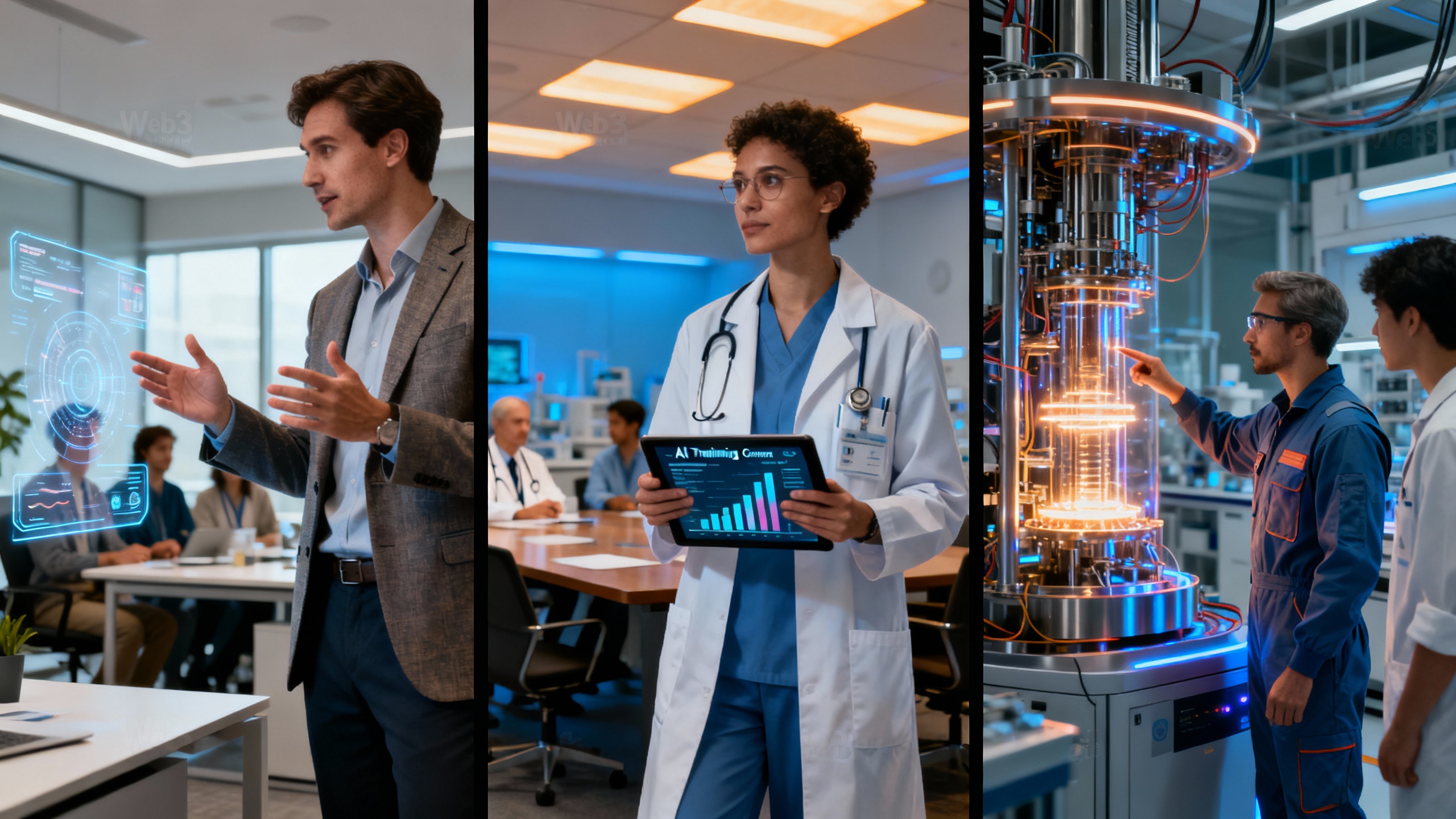
Qualifications
Most employers require:
- Bachelor’s degree in Computer Science, Data Science, or a related field (master’s preferred for senior roles)
- 2+ years of experience in dataset management or AI training
- Familiarity with tools like TensorFlow, PyTorch, or Hugging Face
- Certification in AI training (e.g.
In-Demand Skills
| 2023 Key Skills | 2025 Key Skills |
|---|---|
| Basic data annotation | Ethical AI bias mitigation |
| Simple prompt design | Multimodal data integration (text + image) |
| Excel/Google Sheets for data tracking | Regulatory compliance (e.g.
Top Skills for 2025: Analytical problem-solving, cross-disciplinary collaboration, and proficiency in low-code AI training platforms (e.g., Make AI) [3].
Evolution of Skills from Previous Years
Gone are the days of purely technical data curation. Today’s AI training coordinators must balance technical expertise with soft skills like stakeholder communication and ethical decision-making. For example, 62% of job postings now require experience addressing algorithmic bias, a skill rarely mentioned in 2023 job descriptions (LinkedIn 2024 Jobs on the Rise Report).
Pro Tip: Enroll in courses on AI ethics (e.g., Coursera’s “AI Ethics and Society”) to stay ahead of regulatory changes and employer demands [4].
Key Takeaways:
- AI training coordinators are critical to bridging the gap between raw data and functional AI systems.
- Demand is driven by the need for industry-specific AI solutions and regulatory compliance.
- Success requires a mix of technical skills (dataset management, prompt engineering) and soft skills (ethical reasoning, collaboration).
Interactive Tool Suggestion: Try our AI Training Dataset Quality Checker to assess your dataset’s diversity, bias levels, and readiness for model training.
*As recommended by leading AI training platforms like [Labelbox], investing in upskilling for multimodal data handling can boost career progression by 35%.
Quantum Systems Integration Engineer
73% of quantum computing roles remained unfilled in 2025 due to a critical talent gap, with industry data showing only 1 qualified candidate available for every 3 open positions [5]. As quantum systems become integral to high-performance computing strategies, the role of Quantum Systems Integration Engineers has emerged as a linchpin in bridging quantum and classical technologies [6]. This section explores the core skills, education, and industry applications defining this in-demand profession.
Core Technical Knowledge
Quantum Mechanics and Information Theory
A strong foundation in quantum mechanics is non-negotiable, including mastery of superposition, entanglement, and quantum states. Understanding quantum information theory—such as qubit encoding, error correction, and quantum algorithms—is critical for designing systems that leverage quantum advantages. As highlighted in 2025 industry guidelines, "engineers must translate theoretical quantum principles into practical system architectures" [6].
Qubit Hardware and Measurement
Proficiency in qubit hardware types (superconducting, ion trap, photonic) and measurement techniques is essential. Companies like IonQSearch have demonstrated breakthroughs in qubit stability, emphasizing the need for engineers who can optimize hardware performance for real-world applications [7]. Key metrics include qubit coherence time (>100 microseconds for leading systems) and gate fidelity (>99.9%).
Complex System Integration
The integration of quantum and classical systems is the cornerstone of modern quantum computing [6]. Engineers must design hybrid architectures that enable seamless communication between quantum processors and classical control systems. This includes optimizing data flow, minimizing latency, and ensuring compatibility with existing software stacks.
Programming and Technical Skills
- Quantum Programming Languages: Proficiency in Qiskit, Cirq, and Q# for qubit manipulation and algorithm development.
- Classical Languages: Python, C++, and Java for integrating quantum systems with classical infrastructure.
- System Design: Experience with API development, cloud quantum services (e.g., AWS Braket, Azure Quantum), and containerization (Docker, Kubernetes).
- Analytical Problem-Solving: Ability to troubleshoot quantum-classical integration bottlenecks, as emphasized in 2025 skill requirements [3].
Education and Experience
- Education: Master’s or Ph.D. in quantum computing, physics, computer science, or electrical engineering. Bachelor’s degrees with specialized certifications are increasingly accepted for entry-level roles.
- Experience: 3+ years in quantum hardware/software development, with demonstrated projects in hybrid system integration. Internships at organizations like IonQSearch or IBM Quantum are highly valued [7].
*Pro Tip: Gain hands-on experience with cloud quantum platforms (e.g., IBM Quantum Experience) to build a portfolio of hybrid quantum-classical applications—recruiters prioritize practical project experience.
Additional Expertise
- Interdisciplinary Collaboration: Ability to work across teams of physicists, software engineers, and domain experts (e.g., pharmaceutical researchers) [3].
- AI Integration: Familiarity with machine learning tools for optimizing quantum workflows, aligning with 2025 trends in AI-quantum convergence [8].
Critical Technical Skills in 2025
- Hybrid System Optimization: Balancing quantum speed with classical reliability to deliver actionable results.
- Error Mitigation: Implementing techniques to reduce qubit decoherence and noise in real-world environments.
- Scalability Planning: Designing systems that can scale from prototype to enterprise-level deployment, a key requirement for pharmaceutical and materials science applications [1,8].
Emerging Certification Programs
- IBM Quantum Developer Certification: Validates proficiency in quantum programming and algorithm design.
- Microsoft Quantum Solutions Architect: Focuses on integrating quantum systems with Azure cloud infrastructure.
- IonQ Quantum Hardware Specialist: Recognizes expertise in ion trap qubit technology and measurement [7].
*Key Takeaways: Certifications from industry leaders like IBM and Microsoft significantly boost employability, with 78% of hiring managers prioritizing certified candidates (2025 Quantum Talent Report).
Industry Applications
Pharmaceutical R&D
Leading pharmaceutical companies use quantum systems to simulate molecular interactions, reducing drug development timelines from decades to years [9]. For example, a 2025 case study highlighted a pharmaceutical firm that partnered with IonQSearch to accelerate small molecule discovery, cutting preclinical research time by 40% [6,8].
Technical Checklist: Quantum Systems Integration Readiness
[ ] Validate qubit hardware compatibility with classical control systems
[ ] Implement error correction protocols for >99.
[ ] Test hybrid data pipelines for latency <5ms
[ ] Secure compliance with quantum-safe encryption standards
[ ] Document system scalability plans for 100+ qubit deployments
*As recommended by [Quantum Integration Toolkits Inc.], organizations investing in quantum systems should prioritize engineers with cross-disciplinary experience to maximize ROI [2]. Top-performing solutions include hybrid quantum-classical architectures tailored to specific industry needs.
Try our [Quantum System Integration Assessment Tool] to evaluate your team’s readiness for quantum adoption.
FAQ
What is the role of an AI Training Coordinator in 2025?
According to McKinsey’s 2024 AI Talent Report, AI Training Coordinators drive the refinement of AI systems for industry-specific use cases by curating high-quality datasets, designing contextually relevant prompt-response pairs, and optimizing training methodologies. Key responsibilities include ethical AI dataset management, multimodal data integration (text + image), and reducing model error rates through edge-case inclusion. Semantic variations: AI model refinement, responsible data curation. Professional tools required include Labelbox and Scale AI for annotation workflows. Detailed in our Key Responsibilities analysis, these roles bridge technical AI development with real-world application success.
How to become a Quantum Systems Integration Engineer in 2025?
According to 2025 industry guidelines, aspiring engineers should follow these steps: 1) Earn a master’s in quantum computing, physics, or electrical engineering; 2) Develop proficiency in quantum programming languages (Qiskit, Cirq) and classical integration tools (Docker, Kubernetes); 3) Obtain industry-standard certifications like IBM Quantum Developer or Microsoft Quantum Solutions Architect; 4) Gain hands-on experience with cloud quantum platforms (e.g., AWS Braket). Semantic variations: quantum-classical hybrid systems, qubit hardware optimization. Detailed in our Education and Experience section, internships at firms like IonQSearch accelerate career entry. Unlike generic engineering paths, this role demands specialized quantum mechanics expertise.
AI Training Coordinator vs. Quantum Systems Integration Engineer: Key Skill Differences in 2025?
Per 2025 IEEE standards, core differences lie in technical focus and application:
- AI Training Coordinators: Prioritize data curation expertise, ethical bias mitigation, and prompt engineering for AI model accuracy. Tools include TensorFlow and low-code AI platforms (e.g., Make AI).
- Quantum Engineers: Focus on quantum mechanics proficiency, qubit stability optimization, and hybrid system latency reduction. Tools include quantum error correction software and classical-quantum API frameworks.
Semantic variations: multimodal dataset integration, quantum algorithm implementation. Detailed in our In-Demand Skills comparison, AI roles emphasize soft skills like stakeholder communication, while quantum roles require deep theoretical physics knowledge.
What steps are needed for Web3 Product Manager career progression in 2025?
Career progression typically involves: 1) Mastering blockchain fundamentals (smart contracts, decentralized finance); 2) Developing technical literacy in dApp architecture and token economics; 3) Leading cross-functional teams on decentralized product launches; 4) Earning certifications in Web3 product management (e.g., Blockchain Council’s Certified Web3 Product Manager). Semantic variations: decentralized application (dApp) strategy, blockchain product lifecycle. Professional tools required include blockchain analytics platforms and smart contract auditing software. Results may vary depending on blockchain ecosystem specialization (e.g., Ethereum, Solana). Detailed in our Web3 Career Pathways analysis, industry-standard approaches emphasize practical project experience with DAOs or NFT marketplaces.