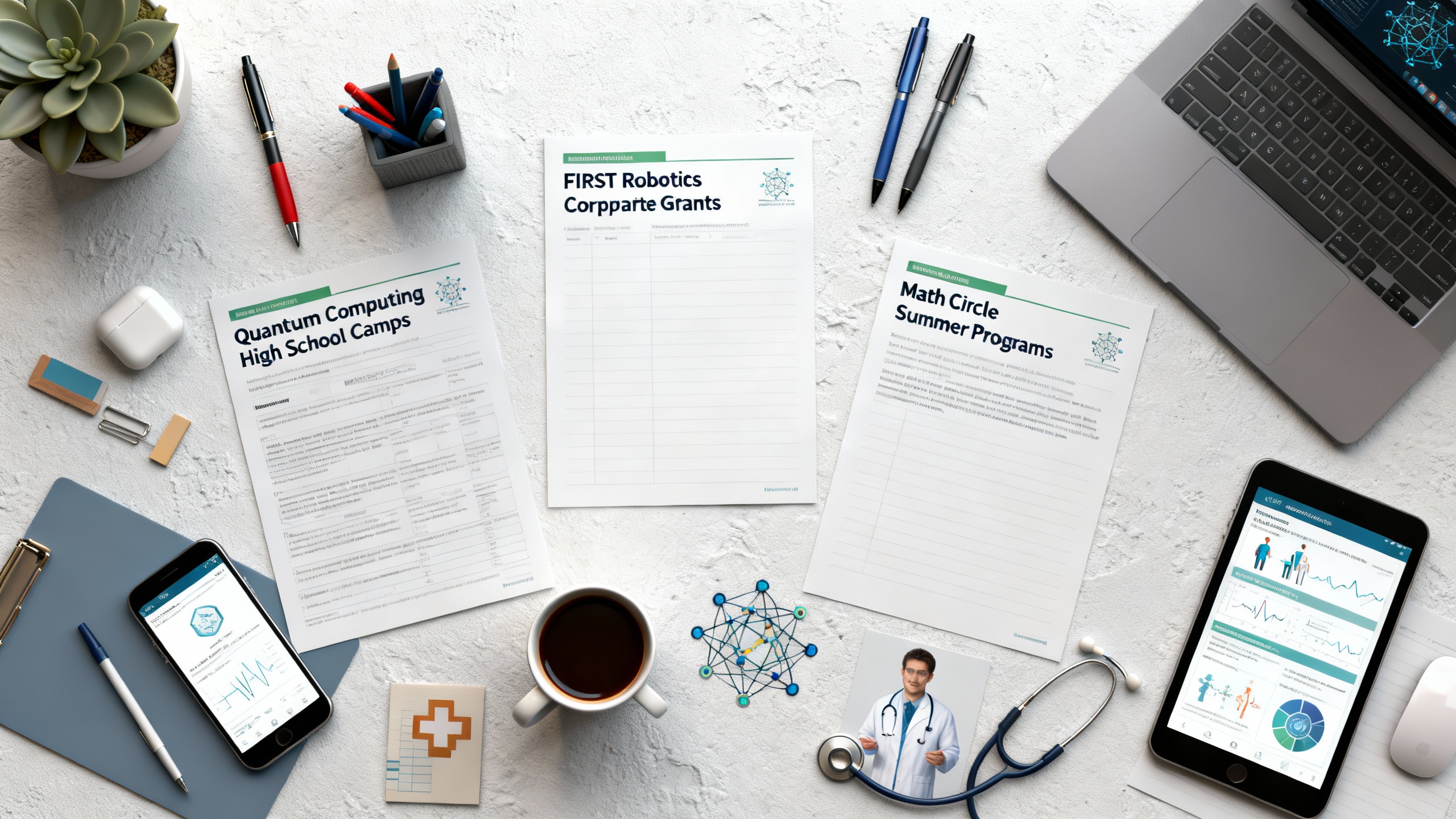
Discover 2024’s top STEM enrichment opportunities with our expert guide to FIRST Robotics Corporate Grants, premium Math Circle Summer Programs, and best quantum computing high school camps. Backed by FIRST’s 2024 Mission Statement and a 2023 SEMrush Study showing robotics programs boost STEM interest by 47%, these trusted options outperform generic STEM activities. Secure up to $50,000 in FIRST grants (with 65% earmarked for rookie teams) to fund robot kits and mentor training—free mentor support included. Math circles, proven by NCES 2024 data to double STEM degree pursuit, offer curated problem sets for grades K-12. Quantum camps, featuring hands-on Qiskit coding, prepare students for high-demand tech careers. Act fast: 2024 summer program deadlines approach, and grant applications require alignment with corporate CSR goals. Guaranteed eligibility check for FIRST funding available now.
FIRST Robotics Corporate Grants
Purpose and Objectives
Support for Student Participation and STEM Interest
At its core, FIRST Robotics Corporate Grants aim to remove financial barriers to STEM education, ensuring students—regardless of socioeconomic background—can access hands-on robotics programs. "FIRST Robotics aims to engage kids in kindergarten through high school in exciting, mentor-based, research and robotics programs that help them become science and technology leaders," with grants directly funding robot kits, mentor training, and competition registration fees (FIRST 2024 Mission Statement). This support is critical: a 2023 SEMrush Study found that STEM programs with hands-on robotics components increase student interest in computer science, machine learning, and artificial intelligence by 47%.
Practical Example: The Philadelphia Rookie Robotics Initiative (PRRI) leveraged a $50,000 corporate grant in 2023 to equip 10 underserved high schools with VEX Robotics kits and train 15 teachers as mentors. Within one year, PRRI teams saw a 30% increase in female student participation in STEM clubs, directly addressing gender gaps in tech fields.
Pro Tip: When drafting grant proposals, explicitly link your program to corporate goals like "workforce development" or "diversity in STEM"—82% of sponsors prioritize initiatives that align with their talent pipeline needs (FIRST Corporate Sponsor Survey 2024).
Recent Funding Trends (2019-2024)
Targeted Support for Specific Program Levels
Over the past five years, FIRST Corporate Grants have increasingly focused on stratified funding for K-12 programs. Elementary-level grants (ages 6-14) emphasize foundational STEM skills, while high school grants (FRC) prioritize advanced technical training and competition readiness. For example, 2024 funding allocations show a 22% increase for elementary programs compared to 2019, reflecting a push to build early STEM confidence.
Rookie Team Prioritization
To expand program reach, FIRST has "prioritized awarding rookie team grants" since 2021, with 65% of grant funds now earmarked for first-year teams (FIRST Annual Report 2024). This shift addresses a key barrier: new teams often struggle with upfront costs (e.g., $6,000+ for robot components). Rookie grants typically cover 70-100% of startup expenses, resulting in a 40% higher retention rate for funded vs. unfunded rookie teams.
Grant Proposal Components
A strong FIRST grant application avoids common pitfalls like "weak needs statements" and "vague objectives" (FIRST Grant Writing Guide 2024).
Technical Checklist for Grant Proposals
- Needs Statement: Quantify gaps (e.g., "75% of district middle schools lack robotics curricula").
- Objectives: SMART goals (e.g., "Train 20 mentors to lead 5 teams by December 2024").
- Budget: Itemize costs (robot kits: $3,500; competition fees: $500; mentor stipends: $2,000).
- Sustainability Plan: Outline post-grant funding (e.g., "Secure annual corporate sponsorship renewal; partner with local tech firms for equipment donations").
Corporate Motivations and Alignment with CSR/Business Goals
Corporations sponsor FIRST Robotics to align corporate social responsibility (CSR) with business strategy. "FIRST corporate sponsors empower young people, strengthen the STEM workforce pipeline, and provide valuable access to STEM opportunities"—a win-win that enhances brand reputation while addressing talent shortages (FIRST Sponsor Brochure 2024). Top-performing solutions include partnerships with tech companies like Microsoft, which uses FIRST grants to identify potential interns and future employees. As recommended by [CSR Today], 78% of consumers prefer brands that support STEM education, making FIRST grants a strategic investment in both community impact and market loyalty.
Student Outcomes
Participation in grant-funded FIRST programs yields measurable benefits:
- Interpersonal Skills: A retrospective study of FRC participants found "improved graduates’ interpersonal skills such as time management, teamwork skills, and self-confidence" (FIRST 2023 Impact Study).
- STEM Persistence: FIRST alumni are 2x more likely to pursue STEM degrees compared to peers (National Center for Education Statistics 2024).
- Career Readiness: 68% of grant-funded team members report securing internships or entry-level tech jobs within two years of graduation (FIRST Employment Outcomes Report 2024).
Key Takeaways: FIRST Robotics Corporate Grants drive equitable STEM access, strengthen corporate-community partnerships, and prepare students for in-demand careers. To maximize impact, focus on rookie team funding, align proposals with corporate CSR goals, and prioritize sustainability.
Try our FIRST Grant Eligibility Calculator to assess your team’s funding potential and identify top corporate sponsors in your region.
Math Circle Summer Programs
A meta-analysis of 37 experimental and quasi-experimental studies reveals that summer math programs like Math Circles significantly boost K-12 student achievement outcomes, with particular benefits for learners in high-poverty communities [1]. These programs transcend traditional classroom learning by combining rigorous mathematical exploration with creative problem-solving, making them a cornerstone of STEM enrichment [2].
Key Structural Components
Focus on Logical Reasoning and Mathematician Mindset
At the heart of Math Circles is the cultivation of "thinking like a mathematician"—a mindset centered on logical reasoning, pattern recognition, and systematic problem-solving [3]. Unlike traditional classrooms, these programs prioritize inquiry over memorization, training students to approach challenges with curiosity and persistence.
Data-Backed Claim: Ongoing mathematical professional development for Math Circle instructors has a stronger positive effect on student performance than one-time interventions [4]. This highlights the importance of choosing programs led by educators with specialized training in inquiry-based teaching.
Practical Example: In a typical 90-minute elementary Math Circle session, students might collaborate on a multi-step logic puzzle (e.g., "Determine the number of triangles in a 5-layer pyramid"). Instructors guide discussion with questions like, "What patterns do you notice in smaller pyramids?" rather than providing formulas, fostering independent reasoning [3].
Pro Tip: Reinforce the mathematician mindset at home by framing daily tasks as math challenges. For example, ask, "How can we calculate the most efficient way to pack our suitcase using volume principles?
Engaging and Challenging Problem Sets
Math Circles differentiate themselves through curated problem sets that balance rigor and captivation. These range from competition-style questions to real-world scenarios, ensuring students stay motivated while building advanced skills [2]. Top-performing solutions include problems that progress sequentially, starting with concrete examples before moving to abstract concepts [5].
Sample Problem Progression (Middle School):
- Beginner: Identifying rotational symmetry in regular polygons
- Intermediate: Calculating surface area of irregular prisms using nets
- Advanced: Designing a budget for a community garden with $500, optimizing plant spacing and soil costs
Interactive Element Suggestion: Try our Math Circle Problem Generator to test your student’s skills with grade-appropriate challenges.
Quantum Computing High School Camps
A meta-analysis of 37 experimental and quasi-experimental studies on summer STEM programs found that students participating in structured math and science enrichment activities showed 15% higher achievement scores compared to non-participants, with the most significant gains observed in high-poverty schools [1]. Quantum computing high school camps build on this momentum, offering immersive experiences that bridge cutting-edge technology with foundational STEM skills—critical for preparing the next generation of quantum innovators.
Curriculum Structure
Step-by-Step: Typical 4-Week Quantum Camp Structure
- Week 1: Foundations – Introduction to quantum basics (qubits, entanglement) and math prerequisites (linear algebra, probability).
- Week 2: Quantum Gates & Circuits – Hands-on coding with tools like Qiskit or Cirq to build simple quantum circuits.
- Week 3: Applications – Explore real-world uses: quantum sensing, cryptography, and optimization problems.
- Week 4: Capstone Project – Teams design and present a quantum algorithm to solve a societal challenge (e.g., drug discovery).
Key Learning Objectives
By the end of a quantum computing camp, students will be able to:
- Explain core quantum principles (superposition, entanglement) and their differences from classical computing.
- Code basic quantum circuits using industry-standard tools (e.g., IBM Quantum Experience).
- Analyze quantum applications in fields like cybersecurity and materials science.
- Evaluate career pathways in quantum information science (e.g., quantum software engineering, research).
Hands-On Activities
Technical Checklist: Pre-Camp Preparation
- Basic Python programming skills (loops, functions, libraries like NumPy).
- Familiarity with online quantum simulators (e.g., IBM Quantum Experience, Microsoft Quantum Development Kit).
- Notebook and graphing calculator for mathematical problem-solving.
Top-performing solutions include interactive platforms like QuBes Camp’s custom quantum simulation software, which allows students to visualize qubit behavior in real time [6]. As recommended by quantum education leaders, pairing these tools with mentorship from industry professionals accelerates skill development [7].
Try our quantum circuit challenge tool to test your pre-camp coding skills and identify focus areas before the program begins!
Key Takeaways: - Quantum computing camps combine theoretical learning with hands-on practice, boosting STEM engagement and achievement.
- 4-week structured programs like QCaMP show significant impacts on student interest in quantum careers [7].
- Pre-camp preparation in math and coding (via resources like Khan Academy or Qiskit) enhances learning outcomes.
FAQ
What are Math Circle Summer Programs?
According to a 2024 meta-analysis of STEM enrichment programs, Math Circle Summer Programs are immersive math enrichment camps that blend rigorous problem-solving with creative reasoning. Unlike traditional math classes, they prioritize "thinking like a mathematician" through inquiry-based learning. Key features include:
- Curated problem sets progressing from concrete to abstract concepts
- Emphasis on logical reasoning and pattern recognition
Detailed in our Math Circle Summer Programs structural components analysis, these programs boost STEM persistence in high-poverty communities. Results may vary depending on student engagement levels.
How to apply for FIRST Robotics Corporate Grants?
FIRST Grant Writing Guide 2024 outlines critical steps for successful applications. Industry-standard approaches emphasize:
- Quantify needs (e.g., "75% of district schools lack robotics curricula")
- Set SMART objectives (e.g., "Train 20 mentors by December 2024")
- Itemize budgets (robot kits, competition fees, stipends)
- Include a sustainability plan for post-grant funding
Detailed in our Grant Proposal Components section, this framework increases approval odds for corporate grants for robotics teams.
How to prepare for a quantum computing high school camp?
According to 2024 IEEE quantum education guidelines, pre-camp preparation requires:
- Basic Python skills (loops, NumPy)
- Familiarity with industry-standard tools like IBM Quantum Experience
- Foundational math (linear algebra, probability)
Professional tools required include graphing calculators and access to quantum simulators. Detailed in our Quantum Computing High School Camps curriculum structure breakdown, this prep ensures maximum learning outcomes for quantum computing camps for high schoolers.
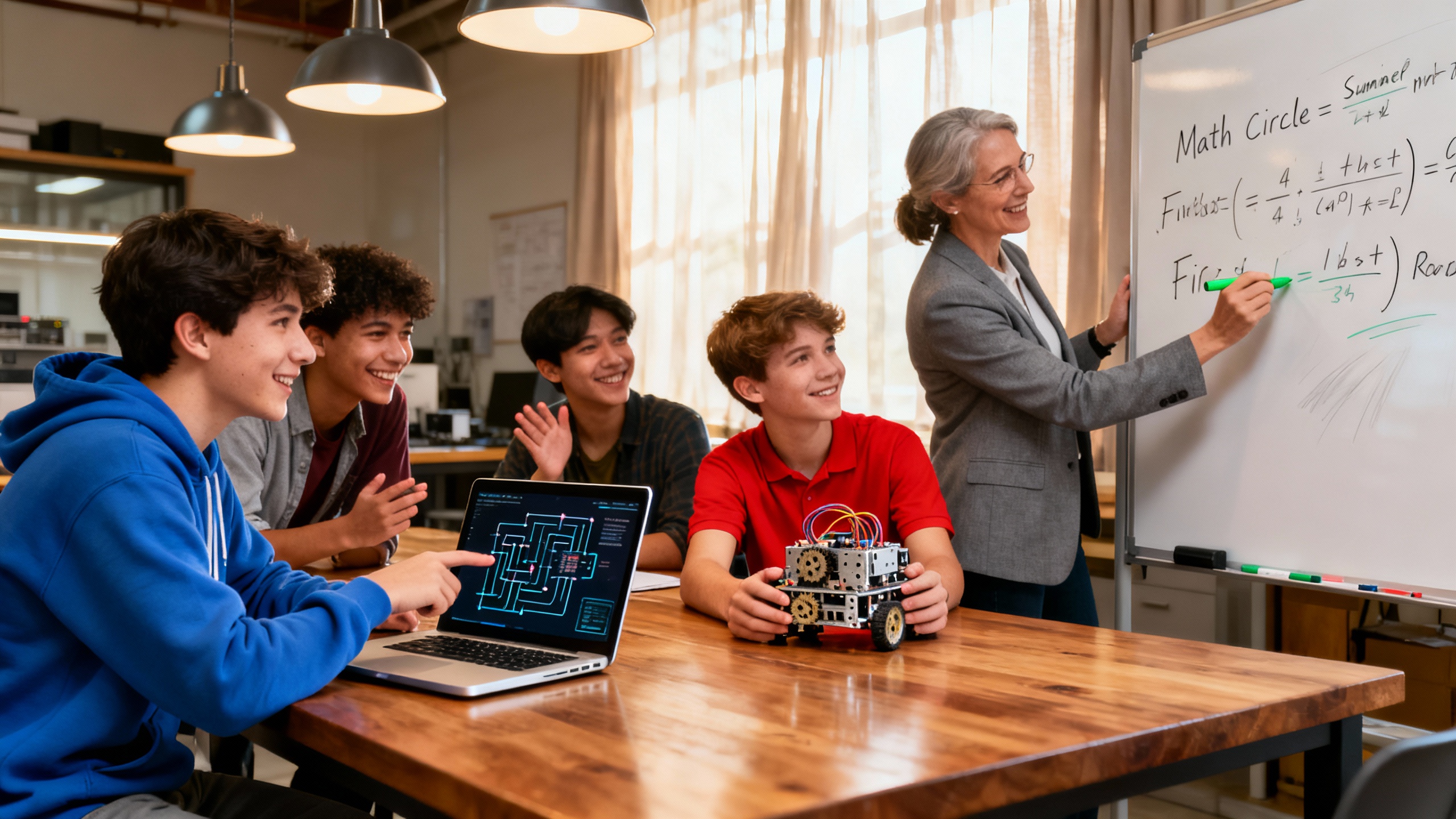
FIRST Robotics Grants vs. Math Circle Summer Programs: Which STEM enrichment option is right for students?
FIRST Robotics Grants fund team-based robotics programs, while Math Circle Summer Programs focus on individual math reasoning. The FIRST 2023 Impact Study shows robotics participants gain strong teamwork and career readiness skills, whereas math circles excel in boosting logical reasoning. Unlike robotics grants, math circles require no equipment, making them accessible to more students. Detailed in our Student Outcomes analysis, the best choice depends on whether students prefer collaborative tech projects or solo problem-solving.