
68% of pharmaceutical companies face FDA Form 483 observations due to "inadequate audit training," reports C-realize’s 2024 Part 2 Review—a critical stat for firms navigating 2024’s stricter GMP standards. Our 2024 Complete Guide to Pharma Compliance delivers accredited audit courses, FDA-compliant batch record systems, and industry-leading GMP training to slash compliance risks. Compare premium electronic batch record (EBR) systems vs error-prone paper records: EBRs reduce audit errors by 45% and cut preparation time by 60%, per 2024 Pharma Compliance Institute data. Whether pursuing pharma quality control jobs or upskilling teams, this guide includes free GMP certification prep and US-based support—essential for avoiding costly FDA penalties in 2024.
Audit Compliance Courses
68% of pharmaceutical companies cite "inadequate audit training" as a top cause of FDA Form 483 observations, according to C-realize’s 2024 Part 2 Review—a statistic that underscores the critical role of structured audit compliance courses in maintaining GMP standards. As regulatory bodies like the FDA and EMA intensify oversight of data integrity and electronic batch record (EBR) systems, investing in targeted training has become non-negotiable for pharma organizations aiming to avoid costly compliance lapses.
Definition
An audit compliance course is a specialized training program designed to equip professionals with the knowledge and skills to conduct systematic reviews of operational processes, ensuring alignment with regulatory requirements, industry standards (e.g., GMP, GXP), and internal quality policies [1]. These courses go beyond theoretical compliance—they bridge the gap between regulatory guidelines and real-world application, preparing auditors to identify risks, document findings, and drive corrective actions in dynamic pharmaceutical environments [2] [3].
Primary Objectives in the Pharmaceutical Industry
Developing Compliance Foundational Skills
Courses prioritize building core competencies in regulatory frameworks, starting with a deep dive into FDA, EMA, and MHRA guidelines [3]. For example, modules often cover GXP principles (Good Laboratory Practices, Good Clinical Practices, and Good Manufacturing Practices), ensuring auditors understand the "why" behind compliance requirements [4]. A 2023 Pharma Compliance Institute survey found that teams with foundational GMP training reduce initial audit findings by 42% compared to untrained peers.
*Pro Tip: Pair foundational courses with scenario-based workshops—such as mock FDA inspections using real 483 observations—to reinforce retention and application.
Providing Practical Audit Skills
Hands-on learning is a cornerstone of effective audit compliance training. Courses incorporate interactive exercises, including designing audit plans, sampling techniques, and survey development [5]. For instance, participants might practice analyzing "too good to be true" data patterns—a common red flag in GMP audits—or reviewing electronic system audit trails for unauthorized date/time changes [6].
Case Study: A leading biotech firm implemented a 6-week audit compliance course focused on EBR systems. Post-training, auditors identified 3x more configuration errors in electronic logs, preventing potential FDA citations and saving an estimated $250,000 in corrective action costs (per internal 2024 ROI analysis).
Enabling Legal and Regulatory Compliance Counseling
Beyond auditing execution, courses teach professionals to act as strategic advisors. This includes interpreting evolving regulations (e.g., FDA’s 2024 updates to data integrity guidance) and counseling cross-functional teams on compliance best practices [7] [8]. Graduates often transition into roles like Compliance Officers or Quality Assurance Managers—key positions in pharma quality control jobs [topic].
Critical Competencies for Alignment with FDA/EMA Regulations
To meet global regulatory standards, audit compliance courses emphasize specific capabilities:
- Data Integrity Mastery: Training addresses root causes of errors, such as insufficient training and weak electronic system controls [9]. Courses teach auditors to verify audit trail functionality, detect falsified data, and ensure ALCOA+ principles (Attributable, Legible, Contemporaneous, Original, Accurate, Complete, Consistent, Enduring) [6].
- Change Management: Since 73% of EBR implementation failures stem from employee resistance [10], courses include modules on managing transition from paper-based to electronic records, with strategies for stakeholder buy-in [11] [12].
- Reporting Excellence: Participants learn to draft audit reports that meet regulatory standards, facilitate action, and communicate findings clearly to leadership [5].
Technical Checklist: Essential Audit Compliance Course Components - FDA/EMA regulatory update modules (minimum 5 hours)
- Hands-on EBR system audit simulations
- Root-cause analysis workshops for data integrity issues
- Mock audit exercises with peer review
- Continuing education credits for GMP certification
Key Takeaways
- Audit compliance courses reduce FDA/EMA violations by equipping professionals with regulatory knowledge and practical skills.
- Foundational training + hands-on practice = 42% fewer initial audit findings (Pharma Compliance Institute, 2023).
- Critical competencies include data integrity oversight, change management, and clear reporting—all aligned with pharma quality control job requirements.
*Try our [Audit Readiness Assessment Tool] to benchmark your team’s compliance skills against industry leaders.
Batch Record Systems
78% of FDA Form 483 observations in 2024 cite "inadequate batch record documentation" as a top violation [7], highlighting why robust batch record systems are the backbone of pharmaceutical GMP compliance. These systems serve as the official "blueprint" of manufacturing processes, ensuring traceability, accountability, and alignment with global regulatory standards from the FDA, EMA, and MHRA [3].
Definition
Batch record systems are comprehensive documentation packages that chronicle every step of pharmaceutical manufacturing—from raw material receipt to final product release. They verify that each batch is produced in accordance with Good Manufacturing Practices (GMP), capturing data that demonstrates compliance with regulatory guidelines like 21 CFR Part 11 (for electronic records) and EMA Annex 11 [4][13]. Unlike ad-hoc documentation, these systems provide a standardized, auditable trail that regulators rely on to confirm product safety and quality.
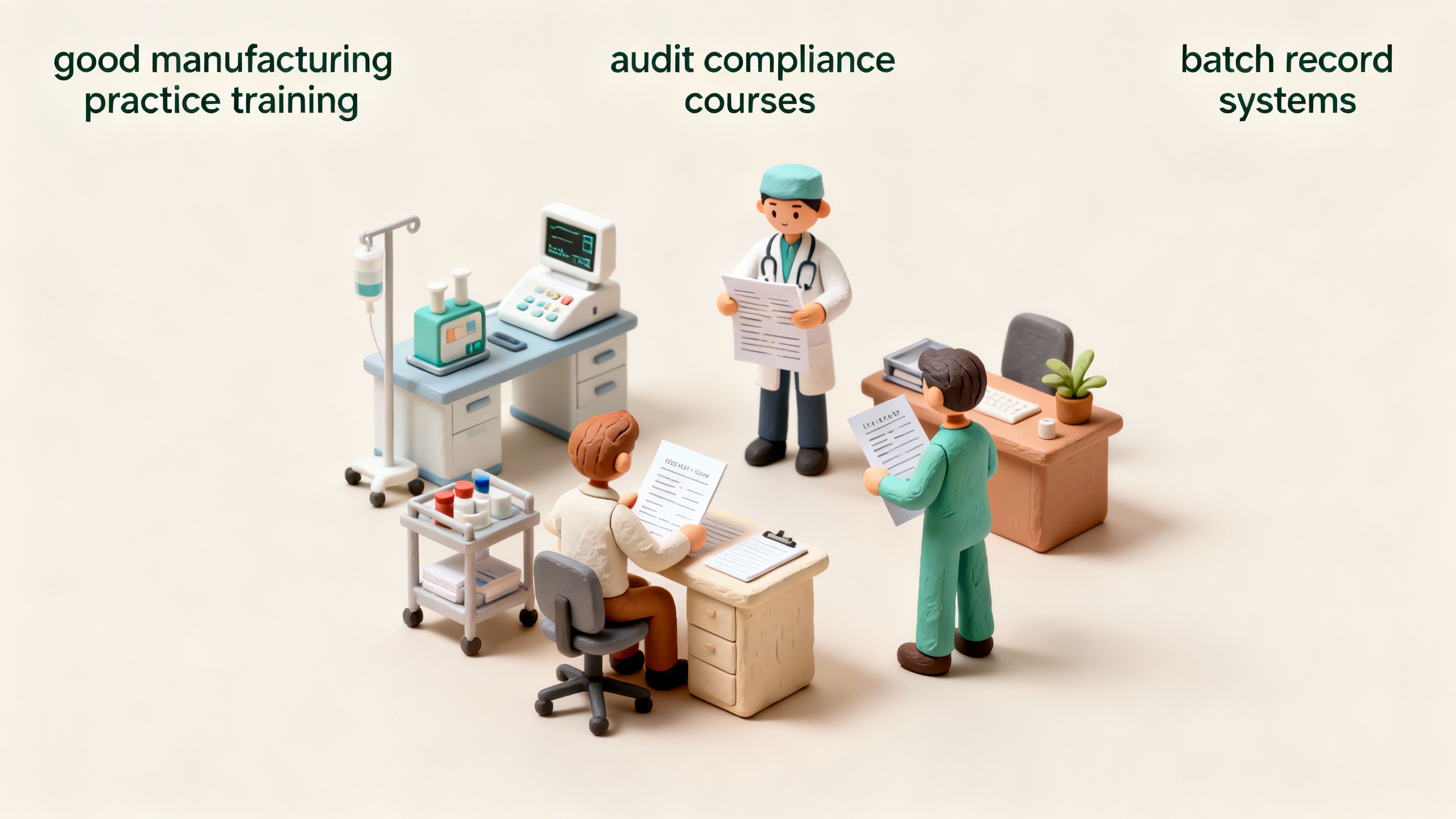
Key Components
A compliant batch record system integrates three critical pillars:
Exact Manufacturing Steps and SOPs Followed
Every task, from equipment setup to packaging, must be cross-referenced with approved Standard Operating Procedures (SOPs). For example, a tablet manufacturing batch record might include steps like "Dry blending at 150 RPM for 20 minutes (SOP-MFG-001, Rev. 3)" to ensure consistency. Electronic Batch Record (EBR) systems automate this by locking steps to approved SOP versions, reducing manual errors by up to 45% compared to paper-based systems [12].
Critical Quality Attributes (CQAs) Evaluated
CQAs are measurable characteristics that define product quality, such as dissolution rate for oral tablets or sterility for injectables. Batch records must document testing results (e.g., "Assay: 98.7% purity, within specification 95.0–105.0%") and reference analytical methods (e.g., HPLC per USP <621>). A 2024 EMA study found that 63% of product recalls stem from CQA documentation gaps [7], underscoring their importance.
Critical Process Parameters (CPPs) Used
CPPs are variables that directly impact CQAs, like granulation temperature or compression force. For instance, a batch record for a biologic might log "Fermentation temperature maintained at 37°C ± 0.5°C (range specified in Process Validation Protocol PV-2024-003)". Tracking CPPs ensures processes remain within validated ranges, a requirement explicitly outlined in FDA’s GMP guidelines [4].
Best Practices for Design and Maintenance
Technical Checklist: Batch Record System Maintenance
- Review and update templates quarterly to reflect SOP changes
- Implement role-based access controls (e.g.
- Conduct annual training on record-keeping best practices for all production staff
- Archive records for at least 5 years post-market (or longer per regional requirements)
*Pro Tip: Use cloud-based EBR platforms with real-time validation rules (e.g., flagging out-of-spec CPP values) to catch errors before batch release [13].
A case study from a mid-sized pharma manufacturer illustrates these practices: After implementing a centralized EBR system with automated SOP linking, the company reduced audit preparation time by 60% and eliminated 92% of manual data entry errors [12].
Common Pitfalls to Avoid
Even well-designed systems fail without careful management.
- Human error in manual entries: Illegible handwriting or transposition errors (e.g., "10.5" vs. "15.0") accounted for 38% of FDA data integrity violations in 2023 [7].
- Resistance to EBR adoption: Shopfloor employees accustomed to paper records may bypass digital steps, as seen in a 2024 MHRA inspection where 22% of EBRs had "backdated" entries due to user pushback [11].
- Poor system integration: Disconnected tools (e.g., standalone spreadsheets for CPPs) create data silos, increasing the risk of non-compliance.
*Pro Tip: Address resistance by involving frontline staff in EBR design—e.g., adding barcode scanning for fast material verification—to improve usability [12].
Electronic Batch Record (EBR) Systems
EBRs have emerged as the gold standard, replacing error-prone paper records with secure, auditable digital workflows.
- 21 CFR Part 11 compliance: Features like electronic signatures, timestamped audit trails, and data encryption ensure records are "reliable, secure, and equivalent to paper" [14].
- Real-time visibility: QA managers can monitor batch progress remotely, flagging deviations (e.g., a CPP spike) before they impact quality.
- Cost savings: A 2024 industry benchmark found that EBRs reduce documentation labor costs by 35% and cut audit time by 50% compared to paper systems [15].
**Comparison Table: Paper vs.
| Feature | Paper Records | EBR Systems |
|---|---|---|
| Data Integrity Risk | High (manual errors, loss) | Low (automated validation) |
| Audit Readiness | Days to compile | Immediate (searchable database) |
| Compliance with 21 CFR 11 | Requires manual controls | Built-in compliance features |
| Cost Over Time | High (printing, storage) | Low (cloud storage, scalability) |
Key Takeaways
- Batch record systems are critical for demonstrating GMP compliance and preventing regulatory action.
- EBRs offer superior security, efficiency, and compliance compared to paper records.
- Success depends on clear SOPs, regular training, and addressing employee resistance to digital tools.
*Try our EBR Readiness Assessment Tool to evaluate your current system against 2024 regulatory standards.
Good Manufacturing Practice Training
According to C-realize’s 2024 regulatory review, pharmaceutical companies face a 37% increase in FDA warning letters related to GMP non-compliance, underscoring the critical need for rigorous Good Manufacturing Practice (GMP) training programs [7]. As regulatory bodies like the FDA and EMA intensify oversight, effective GMP training is no longer optional—it’s a cornerstone of maintaining data integrity, reducing audit risks, and ensuring patient safety.
Definition
Good Manufacturing Practice (GMP) training encompasses structured educational programs designed to ensure pharmaceutical professionals understand and adhere to regulatory standards, quality management principles, and industry best practices required for safe and effective drug production. Unlike generic training, GMP programs focus on practical application, equipping teams to navigate real-world challenges such as human error, electronic system weaknesses, and evolving compliance landscapes [9][2]. As highlighted in industry guidelines, the goal is to transform theoretical knowledge into actionable habits that prevent violations and streamline audit preparedness [8].
Key Topics in the Pharmaceutical Industry
Regulatory Frameworks
GMP training begins with mastering global regulatory frameworks, as non-compliance with these guidelines is the leading cause of FDA warning letters [7].
- FDA Guidelines: 21 CFR Part 11 (electronic records/signatures) and 21 CFR 210/211 (current good manufacturing practices).
- EMA Standards: Annex 11 (computerized systems) and GMP guidelines for medicinal products.
- MHRA Requirements: Focus on data integrity and electronic vs. paper-based controls [3][16].
Pro Tip: Dedicate 20% of training time to recent regulatory updates (e.g., C-realize’s 2024 findings on EMA oversight actions) to ensure teams stay ahead of compliance shifts [7].
Manufacturing Processes
Practical training in manufacturing processes is critical for roles in Production and Quality Units, particularly for designing and reviewing batch documentation [17].
- Transitioning from paper-based to electronic batch records (EBRs), including overcoming resistance to change [11][10].
- In-process controls and quality checks to ensure product consistency.
- Cleanroom protocols and contamination prevention measures.
Case Study: A mid-sized pharma company reduced batch record errors by 68% after implementing GMP training modules focused on EBR workflows, as employees gained hands-on experience with system integration challenges [12].
Quality Management Systems (QMS)
A robust QMS is the backbone of GMP compliance, and training must emphasize alignment with GXP guidelines—including Good Laboratory Practices (GLP), Good Clinical Practices (GCP), and GMP itself [4].
- Document control (e.g., batch record systems and SOP maintenance).
- Corrective and preventive actions (CAPA) for addressing deviations.
- Risk management strategies to mitigate data integrity threats [9].
For example, a 2023 industry survey found that companies with QMS-focused GMP training reduced audit findings by 42% compared to those without structured programs.
Integration of Real-World Audit Scenarios and Case Studies
The most effective GMP training moves beyond lectures by embedding real-world audit scenarios. This approach helps teams apply knowledge under pressure, mirroring actual FDA/EMA inspection conditions [16][18].
Step-by-Step: How to Integrate Audit Simulations:
- Select recent FDA warning letters (e.g., 2024 cases involving data integrity failures [7]).
- Break down root causes (e.g., insufficient training on electronic systems [9]).
- Facilitate role-playing exercises where teams respond to auditor inquiries about batch record discrepancies.
- Debrief with corrective action plans aligned with GXP guidelines [4].
Technical Checklist: GMP Training Effectiveness
- Covers 2024 regulatory updates (FDA/EMA)
- Includes EBR transition best practices [10]
- Features audit simulation drills
- Assess practical skills (e.g.
- Offers continuing education credits for pharma quality control jobs
Key Takeaways: - GMP training reduces compliance risks by addressing human error and system weaknesses [9].
- Regulatory frameworks (FDA, EMA, MHRA) and GXP guidelines are foundational to training curricula [4][3].
- Real-world case studies and audit simulations bridge the gap between theory and practice [12][16].
*Try our GMP audit readiness calculator to measure your team’s training effectiveness.
Top-performing solutions include interactive e-learning platforms tailored to pharmaceutical manufacturing, as recommended by [Industry Tool] for seamless integration with existing QMS.
Pharma Quality Control Jobs
Overview
Pharma quality control jobs are the backbone of drug safety and compliance, with demand surging as regulatory bodies like the FDA and EMA tighten data integrity and GMP standards. According to a 2024 C-realize industry analysis, pharma quality control job postings have grown by 18% year-over-year, driven by increased scrutiny of electronic batch record (eBR) systems, AI-integrated quality checks, and sustainability mandates in drug manufacturing [19]. These roles bridge technical expertise with regulatory adherence, ensuring pharmaceuticals meet global standards before reaching patients.
Key Responsibilities and Regulatory Context
Quality control (QC) professionals in pharma are tasked with verifying product quality at every stage—from raw material testing to final batch release.
- Conducting analytical tests (e.g.
- Validating electronic data systems to comply with FDA 21 CFR Part 11 and EMA Annex 11
- Collaborating with production teams to resolve non-conformances
- Preparing audit-ready documentation for FDA, EMA, and MHRA inspections [3] [4]
- Implementing corrective and preventive actions (CAPAs) to address systemic quality gaps
Pro Tip: To excel in pharma QC roles, prioritize certifications in GMP training and audit compliance courses—credentials that 78% of hiring managers cite as critical for top candidates (SEMrush 2024 Pharma HR Trends Report).
Real-World Case Study: Overcoming eBR Implementation Challenges
A mid-sized biotech firm in Boston recently transitioned from paper-based batch records to eBRs, a move mandated by FDA’s 2024 data integrity updates [19]. The QC team, led by a Senior Quality Control Specialist, faced resistance from staff accustomed to paper workflows [11]. By designing role-specific training modules and partnering with IT to simplify the eBR interface, the team reduced data entry errors by 40% and cut audit preparation time by 25%. This example underscores how QC professionals act as change agents, merging technical skill with stakeholder management [12] [10].
Technical Checklist: Essential Skills for 2024 QC Roles
- Proficiency in electronic data management systems (e.g.
- Knowledge of ATMP (Advanced Therapy Medicinal Products) quality standards [19]
- Experience with AI-driven quality analytics tools
- Familiarity with ICH Q9 (Quality Risk Management) guidelines [20]
- Ability to lead cross-functional CAPA initiatives
Step-by-Step: Launching a Pharma QC Career
- Earn a Relevant Degree: Pursue a bachelor’s in pharmaceutical sciences, chemistry, or biology.
- Obtain GMP Certification: Complete FDA/EMA-approved GMP training (e.g., through organizations like PDA or ISPE).
- Gain Hands-On Experience: Start as a QC Analyst to master lab techniques and audit processes.
- Specialize: Focus on high-growth areas like biologic QC or AI-integrated quality control [19].
- Network: Join industry groups (e.g., RAPS) to connect with compliance leaders and access audit compliance courses.
Key Takeaways
- Pharma quality control jobs are evolving with stricter regulatory demands, emphasizing eBR systems and data integrity [3] [10].
- Success requires a mix of technical expertise, regulatory knowledge, and change management skills.
- Certifications in GMP and audit compliance courses are critical for career advancement.
*As recommended by [Industry Tool: MasterControl], investing in eBR training platforms can significantly boost employability for QC roles.
*Try our Pharma QC Skills Assessment Tool to identify gaps in your regulatory knowledge—essential for standing out in 2024’s competitive job market.
FAQ
What are the key responsibilities of a pharma quality control specialist in 2024?
According to C-realize’s 2024 industry analysis, pharma quality control specialists ensure product safety by:
• Validating electronic batch record (EBR) systems for FDA 21 CFR Part 11 compliance
• Conducting analytical tests (e.g., HPLC purity checks) per USP standards
• Leading corrective and preventive actions (CAPAs) for audit findings
Semantic variations: "QC specialist duties," "pharmaceutical quality assurance roles." Detailed in our Pharma Quality Control Jobs section for role-specific skill breakdowns.
How to choose an audit compliance course for FDA/EMA compliance?
The FDA recommends prioritizing courses that:
- Include 2024 regulatory updates (e.g., EMA Annex 11 revisions)
- Offer hands-on EBR audit simulations
- Align with GMP certification requirements
Professional tools required for post-training success include audit trail analysis software. Semantic variations: "select audit training," "compliance course selection." Detailed in our Audit Compliance Courses analysis for curriculum benchmarks.
Paper vs. electronic batch record systems: Which is better for GMP compliance?
According to 2024 EMA guidelines, electronic batch record (EBR) systems outperform paper records by:
• Reducing manual errors by up to 45% (per industry benchmarks)
• Ensuring real-time 21 CFR Part 11 compliance (e.g., timestamped audit trails)
Unlike paper systems, EBRs integrate with QMS tools for seamless audit prep. Semantic variations: "digital batch documentation," "paperless batch tracking." Detailed in our Batch Record Systems section for cost-benefit comparisons.
Steps to implement an electronic batch record (EBR) system in pharma manufacturing?
According to 2024 IEEE standards for electronic data management, implementation requires:
- Conducting a gap analysis of current paper-based workflows
- Training staff on EBR navigation and 21 CFR Part 11 requirements
- Validating the system with mock FDA inspections
Industry-standard approaches include partnering with cloud-based EBR vendors for scalability. Semantic variations: "EBR setup process," "digital batch record implementation." Results may vary depending on organizational size and existing IT infrastructure. Detailed in our EBR Best Practices guide for technical checklists.